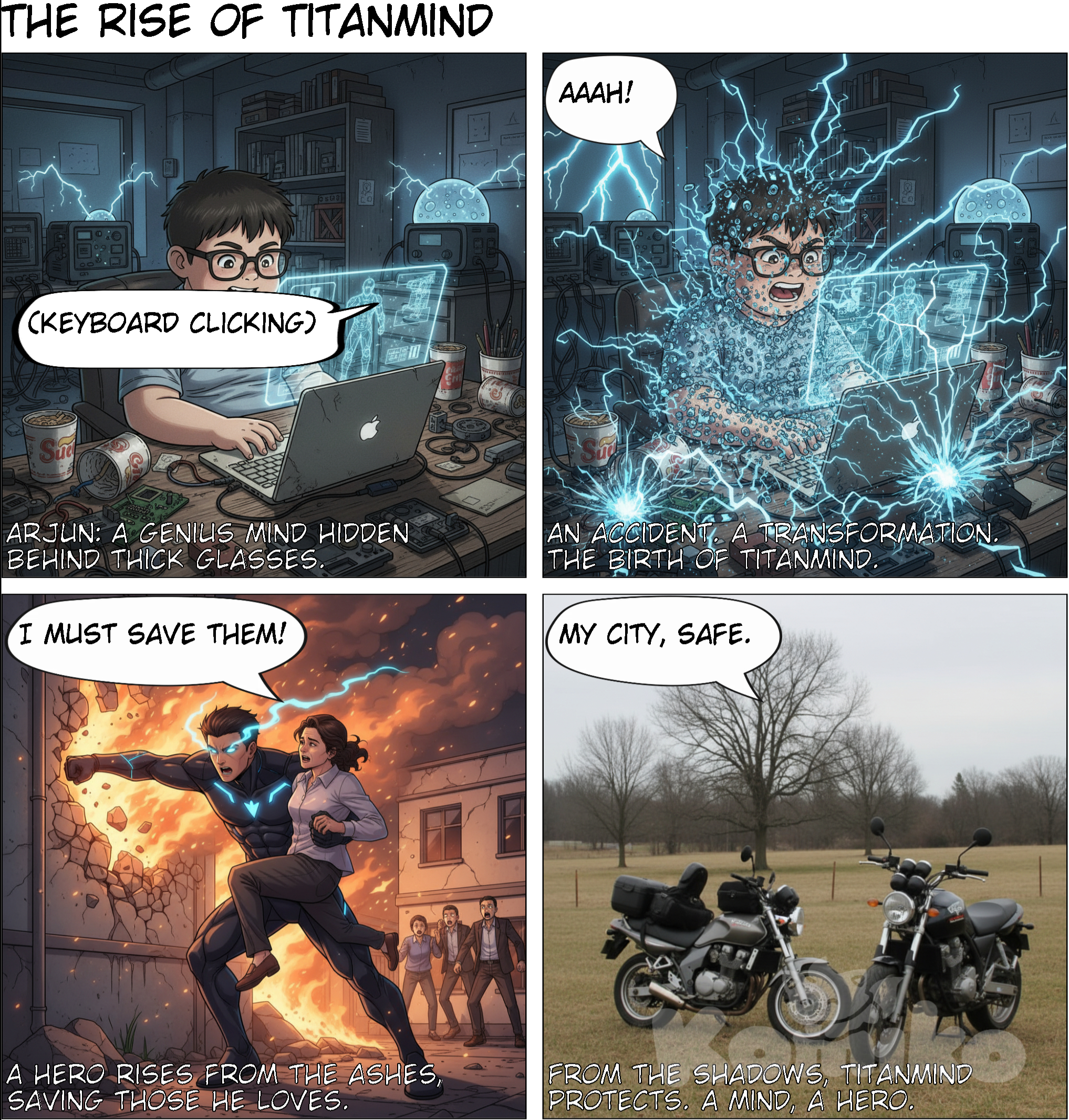
KI-Kunst: The Rise of TitanMind Arjun Varma was not your typical fifteen-year-old. While most kids his age were worrying about acne, cricket matches, or Instagram likes, Arjun was busy hacking into satellite feeds just for fun. He was overweight, always picked last in sports, and had a reputation for being the “fat nerd.” But what no one realized was that behind his chubby cheeks and thick glasses lived a genius mind that never stopped thinking. Arjun had an IQ of 230. He could solve equations that even his teachers didn’t understand. He built drones from scrap metal, coded AI assistants on his cracked laptop, and dreamed of creating inventions that could change the world. Yet, the world didn’t care. At school, bullies called him “butterball” and laughed whenever he ran out of breath on the stairs. But Arjun didn’t fight back. He just smiled and whispered to himself: “One day, they’ll see.” The Accident That Changed Everything One stormy night, Arjun was working in his secret lab—a hidden basement under his grandfather’s old house. He had been experimenting on a project he called Project Titan: a bio-nano suit powered by artificial intelligence and fueled by his own neural patterns. The idea was simple: If machines could learn, why couldn’t they adapt to the human brain? But during a lightning storm, one of his experimental reactors overloaded. Electricity surged through the lab, and Arjun was caught in the blast. Instead of killing him, the nanobots he had been designing bonded with his body. His cells fused with the microscopic machines, rewriting his biology forever. When Arjun woke up, he was no longer just a fat boy. He could run without losing his breath. He could lift heavy metal beams with one hand. His brain processed information a hundred times faster than before. And when he thought of technology—it obeyed. Arjun had become TitanMind. The Birth of a Hero At first, Arjun didn’t know what to do. He was scared. Every time he walked past a gadget, it switched on. His phone could predict messages before they were typed. He could see blueprints of machines in his head like holograms. But then tragedy struck. One night, the same bullies who used to mock him tried to rob a small store near Arjun’s home. They weren’t evil, just desperate. But they lit a fire, and the flames began to spread to the houses nearby. Arjun’s parents were trapped inside. This was the moment of truth. Instead of running, Arjun activated his nano-suit. The black, glowing armor wrapped around him like liquid metal. His eyes glowed blue. He sprinted faster than fire trucks, punched through collapsing walls, and carried his parents to safety. The bullies were frozen in shock—this wasn’t the chubby boy they knew. That night, a hero was born. The Double Life Arjun kept his identity a secret. By day, he was still the “fat genius” who no one took seriously. By night, he was TitanMind, the teenage superhero who controlled machines with his thoughts and fought crime in the streets of Kochi. But being a hero wasn’t easy. His powers came with risks. The nanobots drained his energy, sometimes leaving him weak for days. Governments and corporations wanted to capture him, to study or weaponize him. And villains began to rise—criminals who saw TitanMind not as a savior, but as a challenge. Still, Arjun had one thing they didn’t: his brain. He built weapons, upgraded his suit, created drones, and even designed an AI assistant named Athena who guided him in battles. Slowly, the city began to whisper his name. Kids who once bullied him now drew pictures of TitanMind in their notebooks. People no longer saw him as just a fat boy—they saw him as hope. The Message of TitanMind Arjun’s story wasn’t about muscles or good looks. It wasn’t about being the fastest runner or the most popular kid. His story was about the power of the mind, the courage of the heart, and the belief that even the most underestimated person could become a hero. And so, whenever TitanMind stood on rooftops, looking over the city with his glowing armor, he always remembered one thing: “It’s not about how you look. It’s about what you can do for others.”
Erstellt von cheerful cupcake
Inhaltsdetails
Mediendetails
Nutzerinteraktion
Über dieses KI-Werk
Beschreibung
Erstellungseingabe
Engagement

cheerful cupcake
cheerful cupcake
The Rise of TitanMind Arjun Varma was not your typical fifteen-year-old. While most kids his age were worrying about acne, cricket matches, or Instagram likes, Arjun was busy hacking into satellite feeds just for fun. He was overweight, always picked last in sports, and had a reputation for being the “fat nerd.” But what no one realized was that behind his chubby cheeks and thick glasses lived a genius mind that never stopped thinking. Arjun had an IQ of 230. He could solve equations that even his teachers didn’t understand. He built drones from scrap metal, coded AI assistants on his cracked laptop, and dreamed of creating inventions that could change the world. Yet, the world didn’t care. At school, bullies called him “butterball” and laughed whenever he ran out of breath on the stairs. But Arjun didn’t fight back. He just smiled and whispered to himself: “One day, they’ll see.” The Accident That Changed Everything One stormy night, Arjun was working in his secret lab—a hidden basement under his grandfather’s old house. He had been experimenting on a project he called Project Titan: a bio-nano suit powered by artificial intelligence and fueled by his own neural patterns. The idea was simple: If machines could learn, why couldn’t they adapt to the human brain? But during a lightning storm, one of his experimental reactors overloaded. Electricity surged through the lab, and Arjun was caught in the blast. Instead of killing him, the nanobots he had been designing bonded with his body. His cells fused with the microscopic machines, rewriting his biology forever. When Arjun woke up, he was no longer just a fat boy. He could run without losing his breath. He could lift heavy metal beams with one hand. His brain processed information a hundred times faster than before. And when he thought of technology—it obeyed. Arjun had become TitanMind. The Birth of a Hero At first, Arjun didn’t know what to do. He was scared. Every time he walked past a gadget, it switched on. His phone could predict messages before they were typed. He could see blueprints of machines in his head like holograms. But then tragedy struck. One night, the same bullies who used to mock him tried to rob a small store near Arjun’s home. They weren’t evil, just desperate. But they lit a fire, and the flames began to spread to the houses nearby. Arjun’s parents were trapped inside. This was the moment of truth. Instead of running, Arjun activated his nano-suit. The black, glowing armor wrapped around him like liquid metal. His eyes glowed blue. He sprinted faster than fire trucks, punched through collapsing walls, and carried his parents to safety. The bullies were frozen in shock—this wasn’t the chubby boy they knew. That night, a hero was born. The Double Life Arjun kept his identity a secret. By day, he was still the “fat genius” who no one took seriously. By night, he was TitanMind, the teenage superhero who controlled machines with his thoughts and fought crime in the streets of Kochi. But being a hero wasn’t easy. His powers came with risks. The nanobots drained his energy, sometimes leaving him weak for days. Governments and corporations wanted to capture him, to study or weaponize him. And villains began to rise—criminals who saw TitanMind not as a savior, but as a challenge. Still, Arjun had one thing they didn’t: his brain. He built weapons, upgraded his suit, created drones, and even designed an AI assistant named Athena who guided him in battles. Slowly, the city began to whisper his name. Kids who once bullied him now drew pictures of TitanMind in their notebooks. People no longer saw him as just a fat boy—they saw him as hope. The Message of TitanMind Arjun’s story wasn’t about muscles or good looks. It wasn’t about being the fastest runner or the most popular kid. His story was about the power of the mind, the courage of the heart, and the belief that even the most underestimated person could become a hero. And so, whenever TitanMind stood on rooftops, looking over the city with his glowing armor, he always remembered one thing: “It’s not about how you look. It’s about what you can do for others.”
5 months ago