KI-Kunst: n a neon-lit city, a teenage child storms out of the kitchen, leaving behind a carefully prepared lunch box. Their mother, exhausted but patient, stands in silence, her hands trembling slightly as she tidies up. The screen splits like panels from a comic book—on one side, the teen’s frustration flares; on the other, the mother quietly finishes her task. Tension simmers between them, unspoken but sharp. The lunch box remains untouched on the table, a quiet symbol of care that’s constantly rejected. Days later, the mother is hospitalized. Alone at home, the teen attempts to cook ramen for the first time, fumbling with boiling water and sauce packets. As steam rises, they find an old note tucked into the back of a drawer, written in their mother’s handwriting: “Eat well, love well.” That single line cracks something open. Fragmented memories flood in—the mother staying up late to fix a torn school uniform, skipping meals so her child could eat, working back-to-back shifts with tired eyes and a gentle voice. The kitchen fades into those moments, soft and warm compared to the world they once pushed against. The next day, the teen walks quietly into the hospital room, holding the same lunch box—now packed with love, with care. They place it gently in their mother’s lap. For the first time in a long while, their voice is soft. “Have you eaten yet?” The mother looks at her child, eyes misting, the silence between them finally melting. Their hands meet over the lunch box—once a source of conflict, now a gesture of understanding. And in that quiet, ordinary moment, a lifetime of unspoken love is finally heard.
Erstellt von
Inhaltsdetails
Mediendetails
Nutzerinteraktion
Über dieses KI-Werk
Beschreibung
Erstellungseingabe
Engagement

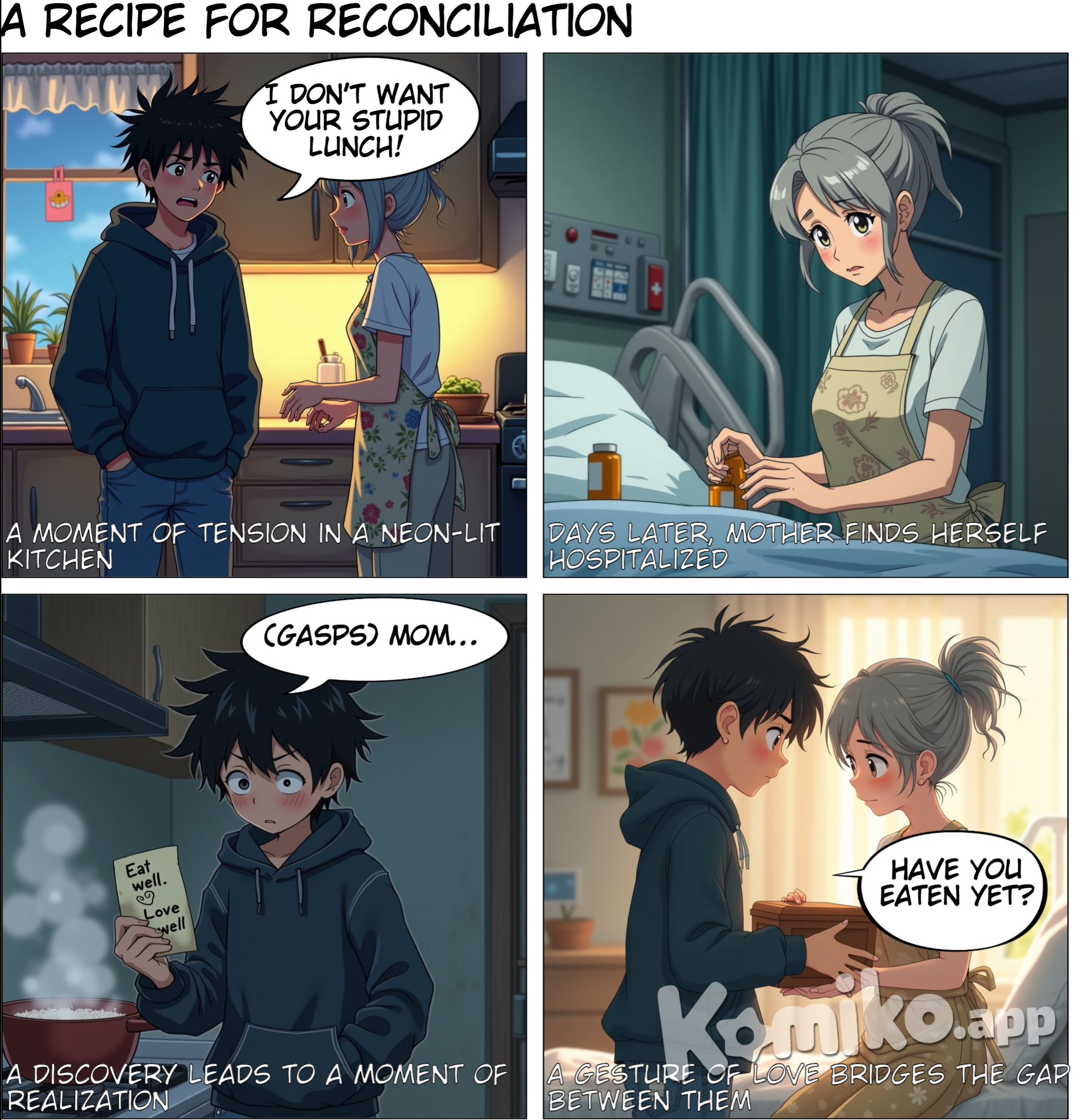
n a neon-lit city, a teenage child storms out of the kitchen, leaving behind a carefully prepared lunch box. Their mother, exhausted but patient, stands in silence, her hands trembling slightly as she tidies up. The screen splits like panels from a comic book—on one side, the teen’s frustration flares; on the other, the mother quietly finishes her task. Tension simmers between them, unspoken but sharp. The lunch box remains untouched on the table, a quiet symbol of care that’s constantly rejected. Days later, the mother is hospitalized. Alone at home, the teen attempts to cook ramen for the first time, fumbling with boiling water and sauce packets. As steam rises, they find an old note tucked into the back of a drawer, written in their mother’s handwriting: “Eat well, love well.” That single line cracks something open. Fragmented memories flood in—the mother staying up late to fix a torn school uniform, skipping meals so her child could eat, working back-to-back shifts with tired eyes and a gentle voice. The kitchen fades into those moments, soft and warm compared to the world they once pushed against. The next day, the teen walks quietly into the hospital room, holding the same lunch box—now packed with love, with care. They place it gently in their mother’s lap. For the first time in a long while, their voice is soft. “Have you eaten yet?” The mother looks at her child, eyes misting, the silence between them finally melting. Their hands meet over the lunch box—once a source of conflict, now a gesture of understanding. And in that quiet, ordinary moment, a lifetime of unspoken love is finally heard.
8 months ago