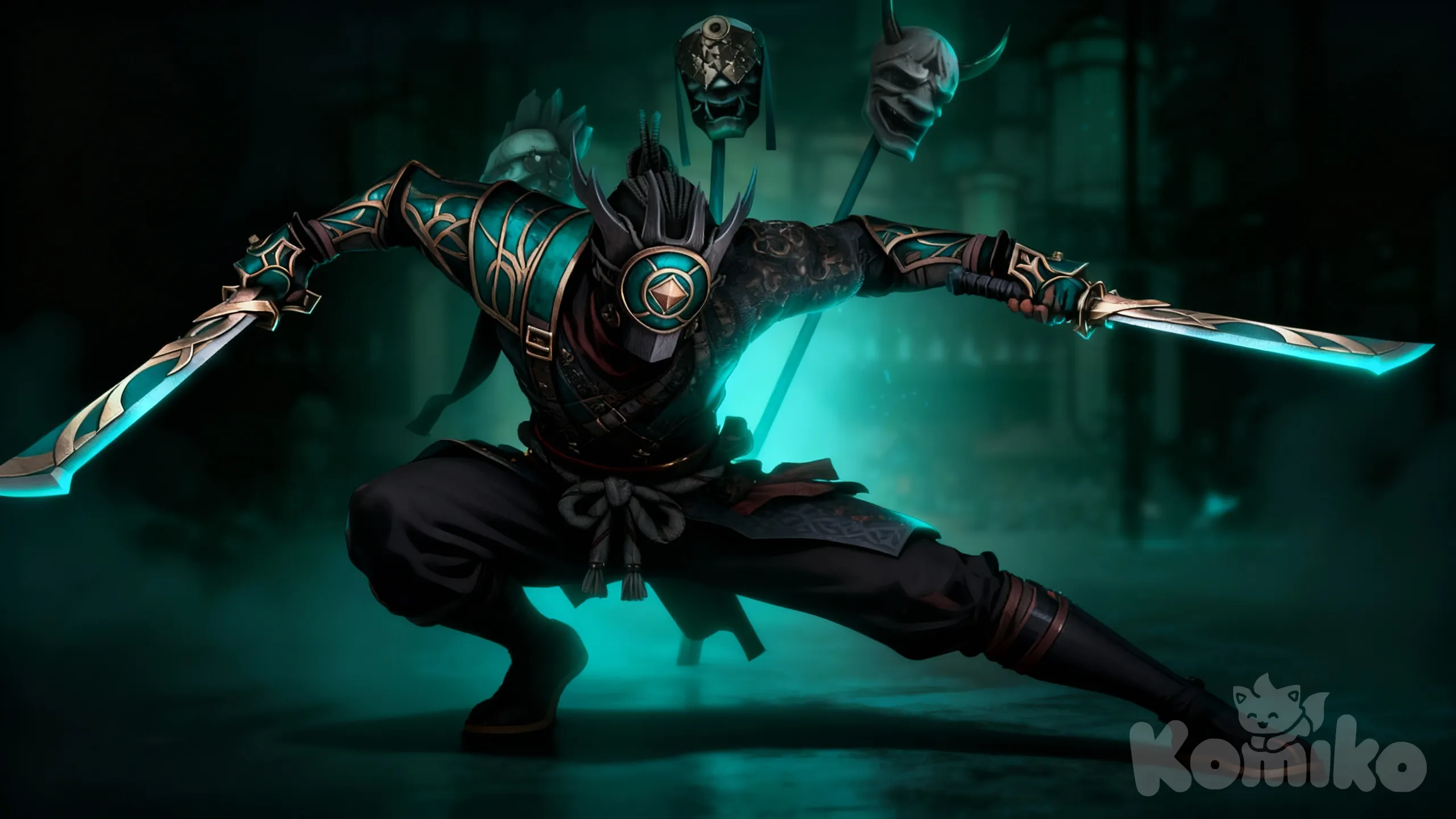
AI Art: photo_5352678902351991046_y **description of the pose in the reference image:** 1. **Overall composition:** * the pose is dynamic and aggressive, demonstrating combat readiness; * the character is in a low, crouched position, which emphasises agility and preparedness for a sudden attack or defence. 2. **Leg position:** * one leg is bent at the knee and extended forward, serving as the main support; * the second leg is also bent, positioned behind, providing balance and enabling a quick change of position; * the feet are firmly planted on the ground, ensuring stability; * the angle of knee flexion is significant — the pose is very close to the ground, typical of martial arts (reduces vulnerability and increases manoeuvrability). 3. **Torso position:** * the torso is leaning forward, with the centre of gravity shifted towards the front leg; * the back is slightly rounded, but not excessively bent — maintaining readiness for instant movement; * muscles are visibly tensed, emphasising combat readiness. 4. **Arms and weapons:** * both arms are extended forward, each holding a sword (katana); * the swords are directed in different directions, creating a «control zone» in front of the character; * elbows are slightly bent, allowing for quick changes in the angle of attack; * the hands are gripping the sword handles tightly, fingers tensed; * the arrangement of the swords is asymmetrical — this makes it more difficult for the opponent to attack. 5. **Head and gaze:** * the head is slightly lowered, the gaze is directed forward (presumably at the opponent); * the face is concealed by a mask/headgear, adding an air of mystery and focus; * the neck is tensed, emphasising concentration. 6. **Weight distribution:** * the majority of the body weight is on the front leg, enabling an immediate transition to attack or defence; * the back leg acts as a «spring» for explosive movements. 7. **Balance and symmetry:** * the pose is asymmetrical but balanced — the low centre of gravity compensates for the extended arms; * the lines of the body and swords create a dynamic, angular silhouette, emphasising aggression and combat readiness. 8. **Additional details:** * straps and elements of the equipment underline the combat-oriented nature of the character; * folds in the clothing and tensed muscles add realism and emphasise physical exertion; * the pose demonstrates a combination of strength, agility and concentration — key qualities of a ninja warrior.
Created by fluffy puppy
Content Details
Media Information
User Interaction
About this AI Creation
Description
Creation Prompt
Engagement

fluffy puppy
fluffy puppy
photo_5352678902351991046_y **description of the pose in the reference image:** 1. **Overall composition:** * the pose is dynamic and aggressive, demonstrating combat readiness; * the character is in a low, crouched position, which emphasises agility and preparedness for a sudden attack or defence. 2. **Leg position:** * one leg is bent at the knee and extended forward, serving as the main support; * the second leg is also bent, positioned behind, providing balance and enabling a quick change of position; * the feet are firmly planted on the ground, ensuring stability; * the angle of knee flexion is significant — the pose is very close to the ground, typical of martial arts (reduces vulnerability and increases manoeuvrability). 3. **Torso position:** * the torso is leaning forward, with the centre of gravity shifted towards the front leg; * the back is slightly rounded, but not excessively bent — maintaining readiness for instant movement; * muscles are visibly tensed, emphasising combat readiness. 4. **Arms and weapons:** * both arms are extended forward, each holding a sword (katana); * the swords are directed in different directions, creating a «control zone» in front of the character; * elbows are slightly bent, allowing for quick changes in the angle of attack; * the hands are gripping the sword handles tightly, fingers tensed; * the arrangement of the swords is asymmetrical — this makes it more difficult for the opponent to attack. 5. **Head and gaze:** * the head is slightly lowered, the gaze is directed forward (presumably at the opponent); * the face is concealed by a mask/headgear, adding an air of mystery and focus; * the neck is tensed, emphasising concentration. 6. **Weight distribution:** * the majority of the body weight is on the front leg, enabling an immediate transition to attack or defence; * the back leg acts as a «spring» for explosive movements. 7. **Balance and symmetry:** * the pose is asymmetrical but balanced — the low centre of gravity compensates for the extended arms; * the lines of the body and swords create a dynamic, angular silhouette, emphasising aggression and combat readiness. 8. **Additional details:** * straps and elements of the equipment underline the combat-oriented nature of the character; * folds in the clothing and tensed muscles add realism and emphasise physical exertion; * the pose demonstrates a combination of strength, agility and concentration — key qualities of a ninja warrior.
18 days ago