Ưu đãi sẽ kết thúc trong 00:00:00

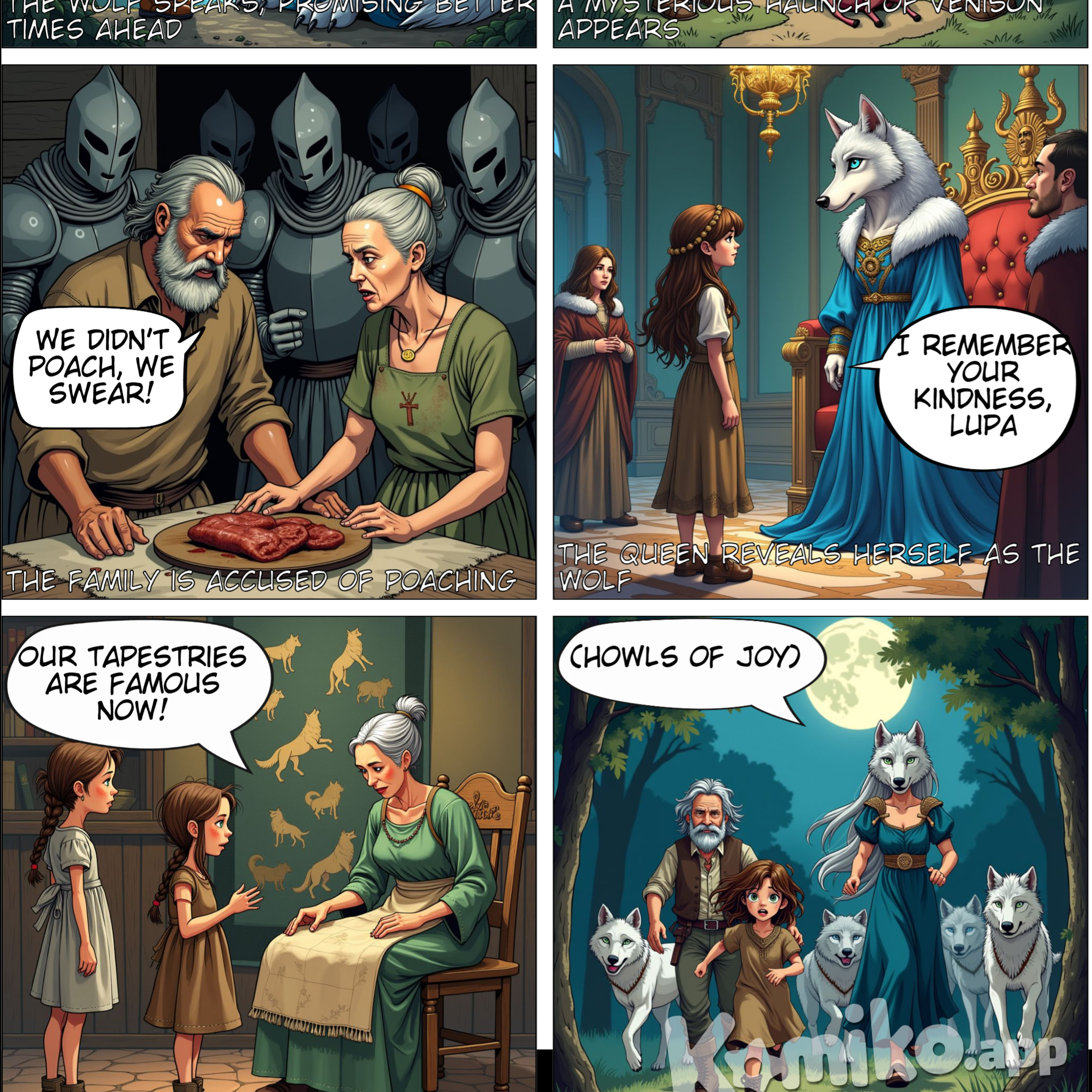
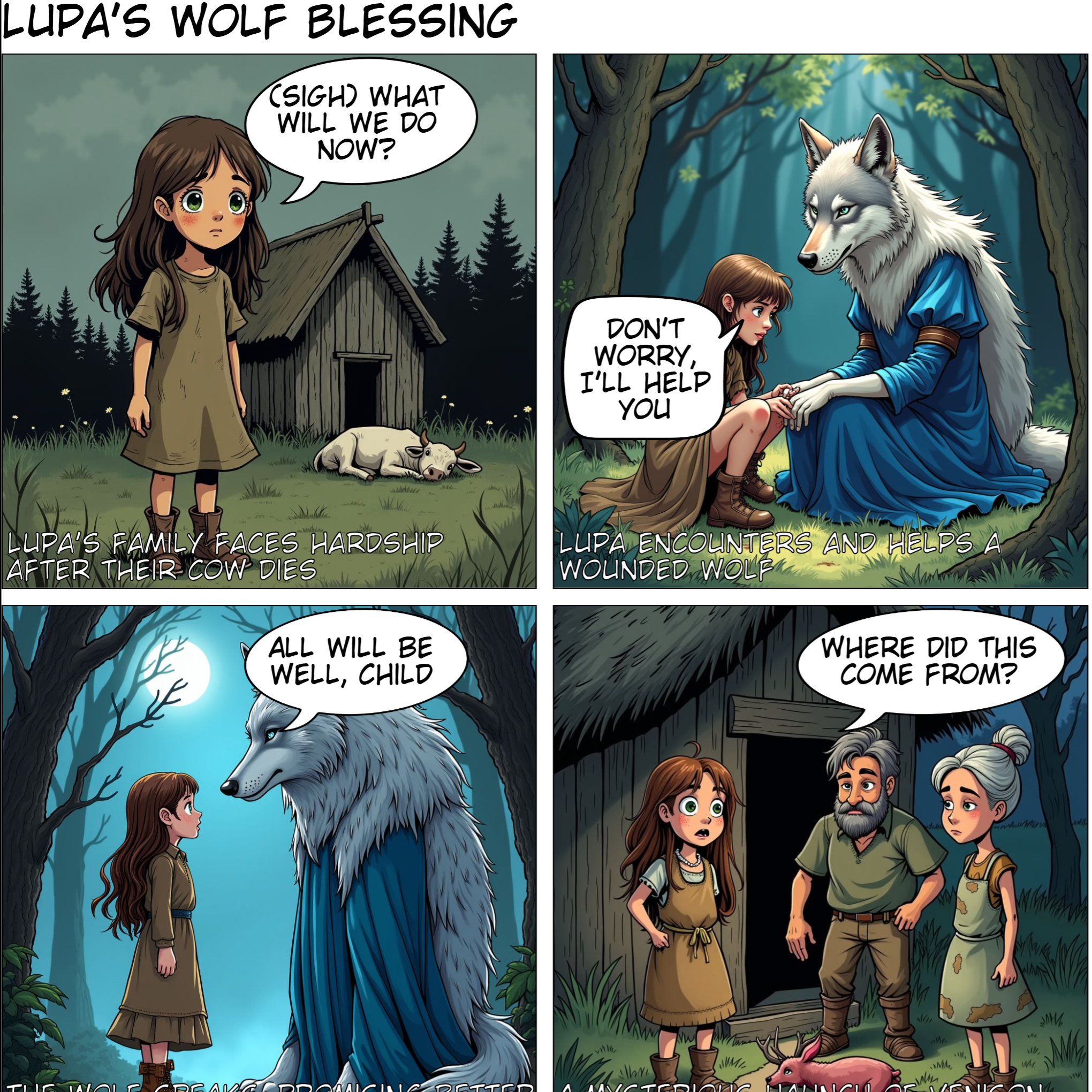
Truyện tranh AI: Wolf worship has roots in ancient European paganism, with some tribes venerating wolves as sacred totems, symbolized by the "Wolf" family name. These clans practiced rituals where they transformed into wolf spirits. In Greek mythology, the god Zeus also took wolf form. Over time, Christian views demonized wolves, contributing to the rise of werewolf legends and fairy tales that depicted wolves as villains, based on childhood fears of large dogs. The story follows Lupa, a kind-hearted girl, whose family faces hardship after their cow dies. She encounters a wounded wolf, helps it, and is told by the wolf that all will be well. Later, a mysterious haunch of venison appears on their doorstep, but the king’s guards accuse them of poaching. They are taken to trial, where the queen shows mercy and reveals that she is the wolf Lupa helped. The queen rewards them by making them her servants, ensuring they live comfortably from then on. Lupa's mother's ruined tapestries are restored and become famous, and Lupa and her father are sometimes seen running with wolves in the forest, led by the queen.

Tạo bởi snuggly marshmallow

Chi tiết nội dung

Thông tin phương tiện

Tương tác người dùng

Về tác phẩm AI này

Mô tả

Gợi ý tạo

Tương tác

snuggly marshmallow
snuggly marshmallow

Wolf worship has roots in ancient European paganism, with some tribes venerating wolves as sacred totems, symbolized by the "Wolf" family name. These clans practiced rituals where they transformed into wolf spirits. In Greek mythology, the god Zeus also took wolf form. Over time, Christian views demonized wolves, contributing to the rise of werewolf legends and fairy tales that depicted wolves as villains, based on childhood fears of large dogs.  The story follows Lupa, a kind-hearted girl, whose family faces hardship after their cow dies. She encounters a wounded wolf, helps it, and is told by the wolf that all will be well. Later, a mysterious haunch of venison appears on their doorstep, but the king’s guards accuse them of poaching. They are taken to trial, where the queen shows mercy and reveals that she is the wolf Lupa helped. The queen rewards them by making them her servants, ensuring they live comfortably from then on. Lupa's mother's ruined tapestries are restored and become famous, and Lupa and her father are sometimes seen running with wolves in the forest, led by the queen.Wolf worship has roots in ancient European paganism, with some tribes venerating wolves as sacred totems, symbolized by the "Wolf" family name. These clans practiced rituals where they transformed into wolf spirits. In Greek mythology, the god Zeus also took wolf form. Over time, Christian views demonized wolves, contributing to the rise of werewolf legends and fairy tales that depicted wolves as villains, based on childhood fears of large dogs.  The story follows Lupa, a kind-hearted girl, whose family faces hardship after their cow dies. She encounters a wounded wolf, helps it, and is told by the wolf that all will be well. Later, a mysterious haunch of venison appears on their doorstep, but the king’s guards accuse them of poaching. They are taken to trial, where the queen shows mercy and reveals that she is the wolf Lupa helped. The queen rewards them by making them her servants, ensuring they live comfortably from then on. Lupa's mother's ruined tapestries are restored and become famous, and Lupa and her father are sometimes seen running with wolves in the forest, led by the queen.Wolf worship has roots in ancient European paganism, with some tribes venerating wolves as sacred totems, symbolized by the "Wolf" family name. These clans practiced rituals where they transformed into wolf spirits. In Greek mythology, the god Zeus also took wolf form. Over time, Christian views demonized wolves, contributing to the rise of werewolf legends and fairy tales that depicted wolves as villains, based on childhood fears of large dogs.  The story follows Lupa, a kind-hearted girl, whose family faces hardship after their cow dies. She encounters a wounded wolf, helps it, and is told by the wolf that all will be well. Later, a mysterious haunch of venison appears on their doorstep, but the king’s guards accuse them of poaching. They are taken to trial, where the queen shows mercy and reveals that she is the wolf Lupa helped. The queen rewards them by making them her servants, ensuring they live comfortably from then on. Lupa's mother's ruined tapestries are restored and become famous, and Lupa and her father are sometimes seen running with wolves in the forest, led by the queen.
—— Hết ——
Khám phá Xem thêm truyện hoặc bắt đầu tự tạo truyện của bạn!

Wolf worship has roots in ancient European paganism, with some tribes venerating wolves as sacred totems, symbolized by the "Wolf" family name. These clans practiced rituals where they transformed into wolf spirits. In Greek mythology, the god Zeus also took wolf form. Over time, Christian views demonized wolves, contributing to the rise of werewolf legends and fairy tales that depicted wolves as villains, based on childhood fears of large dogs. The story follows Lupa, a kind-hearted girl, whose family faces hardship after their cow dies. She encounters a wounded wolf, helps it, and is told by the wolf that all will be well. Later, a mysterious haunch of venison appears on their doorstep, but the king’s guards accuse them of poaching. They are taken to trial, where the queen shows mercy and reveals that she is the wolf Lupa helped. The queen rewards them by making them her servants, ensuring they live comfortably from then on. Lupa's mother's ruined tapestries are restored and become famous, and Lupa and her father are sometimes seen running with wolves in the forest, led by the queen.

#OC

11 months ago

0
    Trực tuyến